
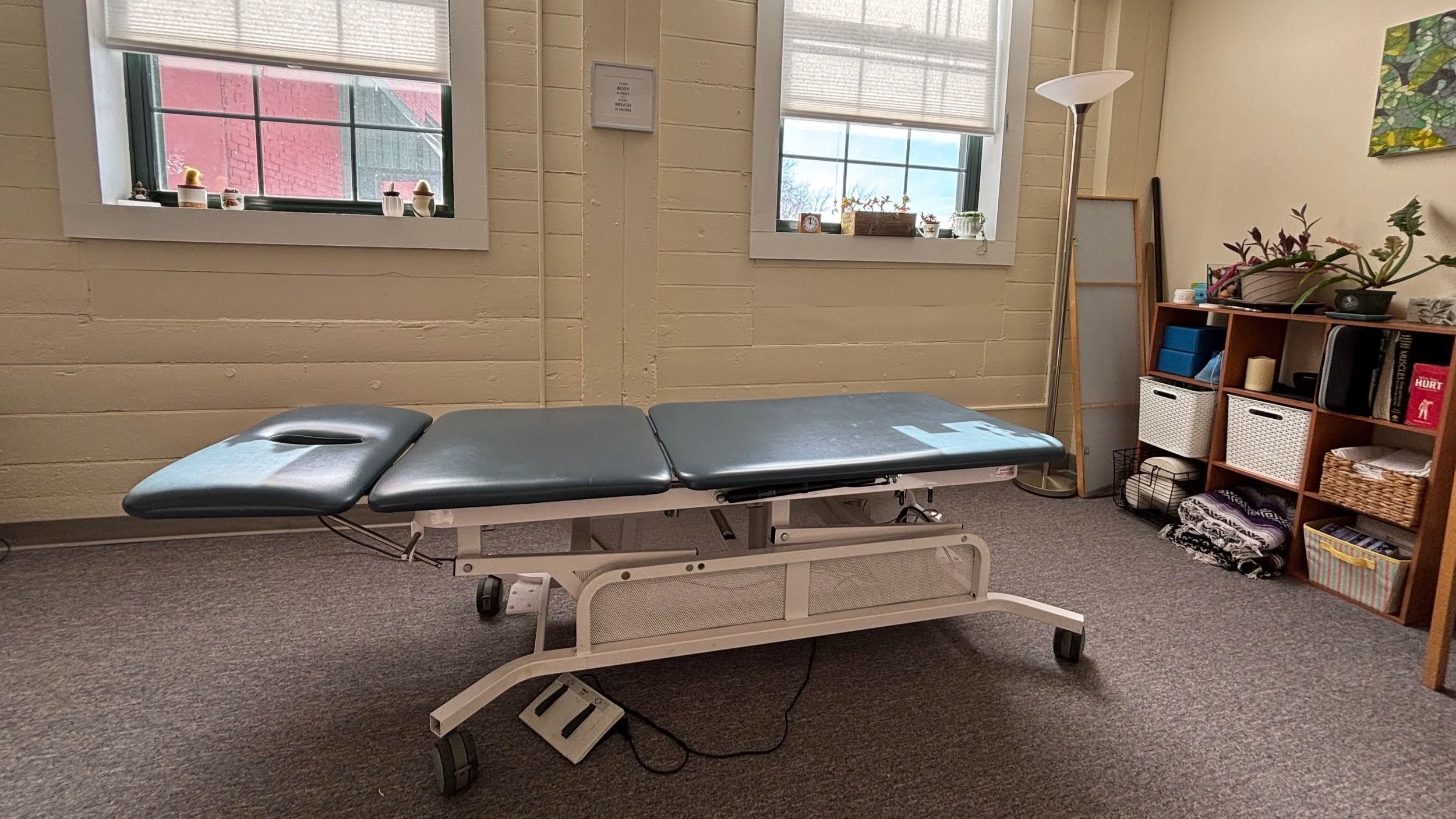
Treatment Approach
Integrative Physical Therapy uses an body+mind approach to treating physical injury, persistent pain conditions, physical impairment, and other body problems.
As part of our care at IPT, you will receive a personalized treatment plan that includes some or all of the techniques listed below. The plan is targeted to the problems we find during the examination, as well as the state of your nervous system. We try to not overload you with too much homework, as what you do at home is the most important part of physical therapy. Sometimes less is more! While our expertise is used to guide you, the treatment plan is created together, with your lifestyle and interests in mind.
Pain Neuroscience Education (aka learning about pain)
If you are in pain, has anybody ever explained why you hurt? Having pain is part of having a body, and yet pain is widely misunderstood in our culture. Understanding pain is very important in when pain persists past how long it would take for tissues to heal (typically 6 weeks-1 year.) Michelle will take the time to explain why you hurt. She will work with you to determine a plan for how to reduce and/or manage pain while making sure you can return to activities you enjoy.
Manual Therapy and Craniosacral Therapy
Michelle has studied a lot of manual therapy techniques over the years. She first studied Functional Manual Therapy (FMT) with the Institute of Physical Art. FMT is a kind of manual therapy that treats muscle, joint, fascial and nerve restrictions. This can help to restore movement, reduce pain and improve function. She also has completed visceral (internal organ) manipulation training with the Barral Institute. In June of 2025 Michelle began practicing biodynamic craniosacral therapy. This is a gentle form of body work that is very helpful for reducing pain through calming the nervous system. The combination of these experiences ensures all body systems can be treated with manual therapy, if needed.
Mindfulness & Yoga
Michelle is a buddhist practitioner and yoga instructor. Yoga and mindfulness can be used into your treatment sessions. This helps improve mind/body connection and calm the nervous system. They are very useful when there is nervous system sensitivity present.
Somatic Pain Management
The word somatic comes from the greek word sōmatikós (σωματικός), meaning “of the body.” Our nervous systems are much more regulated if there is a strong body-mind connection. Sometimes the nervous system shuts down this connection to help us survive. Improving our body-mind connection through somatic exercises can have a pain relieving effect.
Therapeutic Exercise
Movement is an essential part of recovery from injury and managing pain. Simple exercises that you can do at home will be used to address problems that are found during the evaluation process. In addition, general movement and exercise recommendations can also be made.
Body Mechanics Training
How we hold our and move our bodies is important. We live in a world governed by gravity! Learning how to stand, sit, sleep, and otherwise move with good body mechanics can be helpful with recovering from pain and injury.
Frequently Asked Questions
-
You will receive exercises and other kinds of home work starting from your first PT session, as well as other tools for managing symptoms. The program will be co-created. You will be supported in finding ways to implement the homework so that you can be successful.
-
Manual therapy can help loosen things up. This can help with reducing pain as well as improving function. This involves placing the hands on joints, muscle, skin, fascia, and nerve. Pressure is then applied that helps the system release tight areas.
-
Some people see results within 1-2 visits, for others it may take longer. If there are no results in 6 visits, It’s time to change the treatment plan, unless we understand why it’s taking a long time. Results happen a lot faster when people do the homework!
-
How we sit, stand, and move can lead to repetitive stress on our joints, muscle, tendons, and contribute to pain. We will watch how you do what you do, and give you ideas how to change your body mechanics so that the repetitive stress is reduced. This can also prevent injury in the future
-
Mindfulness helps by changing how the brain processes pain and by improving how the nervous system functions as a whole. The results can be immediate, or they can take much longer. Mindfulness does not mean you will be asked to start a meditation practice! It might be as simple as trying to feel your feet for a few minutes while you are sitting at your work desk.