

Physical Therapy
The cornerstone of physical therapy at IPT is the understanding that pain is a complex nervous system phenomenon. Traditional physical therapy treatments like exercise, manual therapy, and how to sit and stand, are used with this big picture in mind. These are combined with other treatments for nervous system health. A psychologically informed approach centers YOU using active listening and goal setting. You may also learn more about the science of what happens when we have pain! If you are in pain, concrete strategies for pain management are given based on your unique self and situation. The goal is always for you to return to your fullest life. To learn more about our treatment approach, go here.
Effective treatment begins with a thorough evaluation. After the evaluation you will understand your problem better. This likely includes a physical therapy diagnosis, which is an explanation of your problem based on your tissues. Strained hamstring, herniated disc, torn rotator cuff, are all physical therapy diagnoses. In addition, you will also understand the part of your nervous system that is responsible for your pain. Through this process you will have an improved understanding of your condition, and some new ideas for how to help improve your situation. If you’d like to know more about this part of the process, check out my blog post “Who’s driving your pain?”
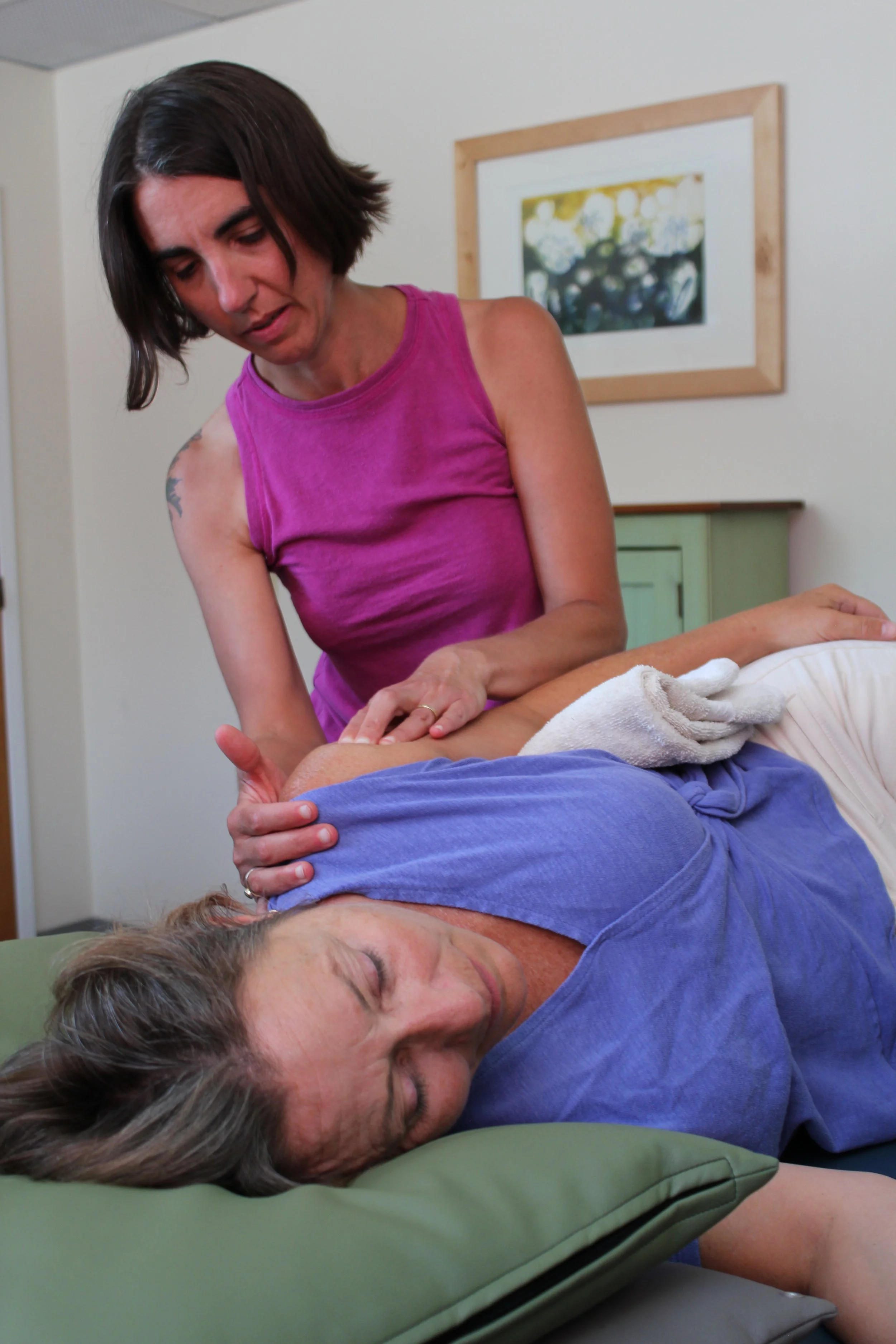
This approach is appropriate for any kind of injury or pain condition. A list of commonly treated conditions is below. It is especially good if your problem has been going on for years, if you have a history of trauma, or know/suspect you have a sensitive nervous system
Bursitis
Tendinitis
Overuse injuries
Sacroiliac joint pain/dysfunction
Patellofemoral pain
Fibromyalgia
Hip impingement
Sprains/strains
Whiplash
Pain after traumatic events, such as a car accident
Myofascial pain syndrome
Ankle sprain
Carpal tunnel syndrome
Pelvic instability
Disc herniation or bulge
Nerve pain or injury to the nerve
Chronic Regional Pain Syndrome (CRPS)
Pelvic pain
Vaginissmus
Vulvodynia
Chronic back and neck pain
Piriformis syndrome
Sciatica
Arthritis
Plantar Fascitis
Acute and chronic tendonitis
Iliotibial band syndrome
Psoas strain or pain
Frequently Asked Questions
-
The first appointment begins by you describing your problem, and answering any relevant questions. You will also describe what your goals for physical therapy area, and treatment approach will be discussed. After that, a physical examination will happen, and you will receive some treatment to begin the healing process.
-
Anywhere from 60-75 minutes. The rest of the appointments are 55 minutes.
-
Some people see results within 1-2 visits, for others it may take longer. If there are no results in 6 visits, It’s time to change the treatment plan, unless we understand why it’s taking a long time. Results happen a lot faster when people do the homework!
-
Michelle usually begins with weekly sessions until symptoms have calmed down and a good at home routine is happening. Then sessions can reduce to every other week and begin to taper off.
-
We are currently accepting and able to bill Blue Cross Blue Shield, VT Medicaid, most kinds of Medicare, MVP. If you have cigna and have good out of network benefits, we can bill cigna directly. If you are confused about your insurance, reach out, we can help!
-
If I am not currently in network with your insurance, please contact us to inquire about our self-pay rates. If you have out of network benefits, we may be able to directly bill your insurance company.
-
Medicaid clients need a referral prior to beginning physical therapy. All other insurances are "direct access" which means no referral is necessary. Any doctor's notes are helpful, even when not necessary.
-
Paperwork will be emailed to you through our online system. You will need to fill out the paperwork prior to your first appointment. Double check to make sure your we are in network and able to bill your insurance
-
Insurance card
calendar to assist in making future appointments
doctor's referral (necessary for medicaid clients, helpful for everyone)
medication list (if appropriate)
wear or bring clothing that will help us see the problem area (shorts, tank top, loose fitting pants, etc.)
-
We ask for 48 hours notice for any cancellation. Late cancellations and missed appointments may lead to a $50 cancellation fee. Many late cancellations or missed appointments may lead to an inability to make future appointments.